Overview
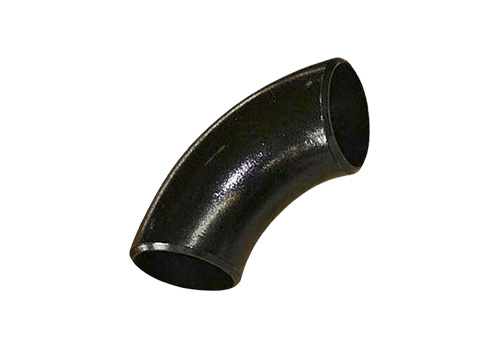
A carbon steel elbow is an essential pipe fitting used in plumbing and industrial piping systems to change the direction of flow. Available in 45°, 90°, and 180° angles, these elbows can be connected through threaded or welded joints. At Vivek Enterprises, we manufacture CS elbows that serve critical applications in oil & gas, chemical processing, water treatment, and power generation industries. Our elbows meet ASTM A234 Gr. WPB and A420 Gr. WPL6 standards, ensuring reliable performance under demanding conditions.
Features
- Available in 45°, 90°, and 180° angles
- Long radius (1.5× pipe diameter) and short radius options
- Materials: ASTM A234 Gr. WPB, A420 Gr. WPL6
- Weldable — butt weld and socket weld connections
- Threaded options for low-pressure applications
- Sizes from ½ inch to 48 inches
Specifications
| Material Grades | ASTM A234 Gr. WPB, A420 Gr. WPL6 |
| Angles | 45°, 90°, 180° (22.5° and 60° available) |
| Size Range | ½ inch to 48 inches |
| Wall Thickness | Sch 40, Sch 80, Sch 160 |
| Radius | Long Radius (1.5D), Short Radius (1.0D) |
| Standards | ASME B16.9, ASME B16.11, MSS-SP-75 |
| Connection Types | Butt Weld, Socket Weld, Threaded |
Applications
Oil & Gas
Crude oil, natural gas, and refined product pipelines requiring high-pressure integrity
Chemical Processing
Navigating pipes carrying corrosive liquids, acids, and chemicals
Water Treatment
Directing water flow through filtration, sterilization, and treatment stages
Power Generation
Steam transport, cooling systems, and lubricant pipelines
Construction
Plumbing systems, compressed air lines, and fire sprinkler systems
Shipbuilding
Fuel, saltwater, and ballast water transfer systems
FAQ
Carbon steel elbows are widely used in oil and gas pipelines for crude oil, natural gas, and refined product transmission where high-pressure integrity is critical. In petrochemical plants, they route process lines carrying hydrocarbons, acids, and chemical intermediates between processing units. Power generation facilities use CS elbows in steam transport lines, boiler feedwater systems, and cooling water circuits where temperatures can reach 500°C and pressures exceed 1,000 PSI. Construction and building services applications include plumbing risers, compressed air distribution, fire sprinkler systems, and HVAC chilled water loops. They are also essential in shipbuilding for fuel, ballast, and seawater systems, as well as in water treatment plants for directing flow through filtration and chemical dosing stages.
We offer carbon steel elbows in 45-degree, 90-degree, and 180-degree angles, available in both long radius (LR) with a centerline radius of 1.5 times the nominal pipe diameter and short radius (SR) with a radius equal to the nominal pipe diameter. The 90-degree LR elbow is the most commonly used for general directional changes where smoother flow is needed, while 90-degree SR elbows are specified in space-constrained installations. The 45-degree elbows provide gradual directional changes for reducing turbulence, and 180-degree return bends are used for reversing flow direction in heat exchangers and boiler tubing. All configurations are manufactured to ASME B16.9 standards in sizes ranging from half inch to 48 inches, with wall schedules from Sch 10 through Sch 160.
Carbon steel elbows are manufactured through hot forming, cold bending, or extrusion processes depending on size, wall thickness, and angle requirements. Hot forming involves heating the pipe or plate to forging temperature and forming it around a mandrel, which is suitable for thick-wall and large-diameter elbows. Cold bending uses mechanical force at room temperature for smaller sizes and thinner schedules. Extrusion processes push a heated billet through a die to create seamless elbows with uniform wall distribution. Every elbow undergoes rigorous quality testing including hydrostatic pressure tests to verify leak integrity, ultrasonic testing to detect internal defects, radiographic examination of weld joints for fabricated elbows, and dimensional inspection per ASME B16.9. All testing follows ASTM A234 and applicable NDE standards.