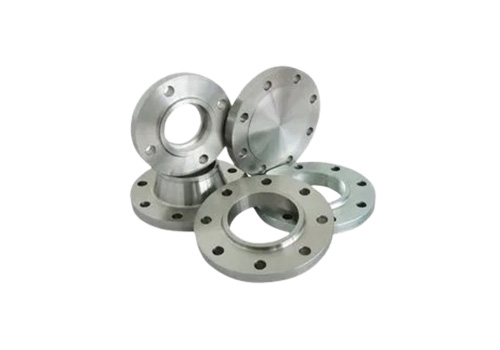
Overview
Mild steel flanges are workhorse components in pipe fitting systems, extensively used to connect pipes, valves, and equipment. Made from low-carbon steel (0.05%-0.25% carbon content), they offer an excellent balance of affordability, weldability, and strength. Our range includes slip-on flanges, threaded flanges, blind flanges, and flanged elbows — manufactured to ASTM A53 and ANSI/ASME B16.5 standards.
Features
- Multiple types: Slip-on, Threaded, Blind, Flanged Elbow
- Low-carbon steel construction (0.05%-0.25% carbon)
- Excellent weldability and machinability
- Black oxide finish as standard; galvanizing available
- Cost-effective alternative to SS or alloy steel flanges
- Wide size range for various pipe diameters
Specifications
| Material | Low-Carbon Mild Steel (0.05%-0.25% C) |
| Standards | ASTM A53, ANSI/ASME B16.5, MSS SP-44 |
| Size Range | ½ inch to 48 inches NPS |
| Pressure Classes | Class 150, Class 300 |
| Types | Slip-On, Threaded, Blind, Flanged Elbow |
| Finish | Black Oxide (standard), Galvanized (optional) |
| Schedules | Schedule 40, Schedule 80 |
Applications
Construction
Low-pressure gas, air, and water lines in HVAC and plumbing systems
Wastewater Treatment
Piping systems without highly corrosive materials
Water Supply
Irrigation, compressed air, and low-to-medium pressure water supply
Process Piping
Low-pressure fluids including water, steam, and mild chemicals
HVAC Systems
Low-to-medium pressure air handling and distribution
Shipbuilding
Non-critical fluid and gas lines
FAQ
Mild steel flanges are extensively used in construction for low-pressure gas, air, and water lines within HVAC and plumbing systems where their affordability and weldability provide significant advantages. In wastewater treatment plants, MS flanges serve in non-corrosive service lines including aeration, sludge handling, and effluent discharge piping. Water supply applications include irrigation networks, compressed air distribution, and municipal water lines operating at Class 150 and Class 300 pressures. Process piping in manufacturing plants uses MS flanges for low-pressure steam, cooling water, and mild chemical solutions where stainless steel would be unnecessarily expensive. They are also common in shipbuilding for non-critical fluid and gas lines, and in fire protection systems for sprinkler supply connections where cost-effective, reliable joints are required.
We ensure quality through strict adherence to ASME B16.5, ASTM A53, and MSS SP-44 standards throughout our manufacturing and sourcing process. Every MS flange undergoes dimensional inspection using calibrated gauges to verify bolt hole alignment, flange face flatness, hub thickness, and overall diameter within permissible tolerances. Material testing includes verification of tensile strength (minimum 60,000 PSI for mild steel), yield point, and elongation to confirm the flange meets mechanical property requirements. Impact testing is performed for low-temperature applications to ensure ductility. We also conduct pressure testing on assembled flange joints to verify leak integrity under rated working pressures. Each flange carries identifiable markings indicating material grade, pressure class, and size for full traceability back to the original mill test certificate.
Mild steel flanges offer several distinct advantages over stainless steel or alloy alternatives. The primary benefit is cost mild steel flanges are typically 40 to 60 percent less expensive than equivalent stainless steel flanges, making them the economical choice for large-scale projects and non-corrosive services. MS flanges also provide excellent weldability due to their low carbon content of 0.05 to 0.25 percent, allowing for reliable field welding without special procedures or preheating in most cases. Their good machinability makes on-site modifications like drilling, tapping, and facing straightforward. The mechanical properties of mild steel with tensile strength around 60,000 PSI are adequate for the majority of low-to-medium pressure applications up to Class 300. Additionally, MS flanges can be hot-dip galvanized after fabrication for enhanced corrosion resistance at a fraction of the cost of solid stainless steel.